How Mux Solved the B2B Software Demo Problem by Letting Prospects Test Drive AI with Their Own Data

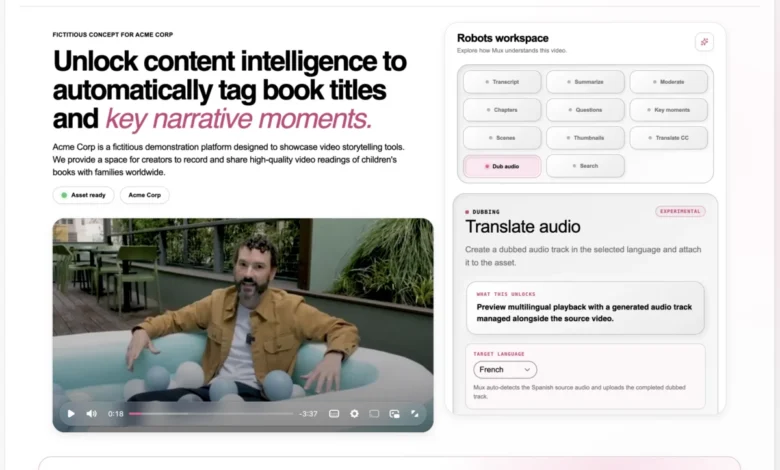
Software demonstrations have long relied on a standard playbook: a slide deck outlining technical architecture, followed by a generic dashboard walkthrough populated with dummy data. While this approach has sustained the enterprise software industry for decades, it often forces potential buyers to mentally bridge a wide gap between a vendor’s controlled environment and their own messy, real-world applications. Recognizing this friction in the marketing of its AI-powered video automation suite, Mux Robots, video infrastructure platform Mux has overhauled its sales engineering strategy. Rather than asking prospects to imagine how automated transcription, translation, and content clipping might work for their business, the company now builds customized, fully branded demo environments on the fly using automated web scraping and customer-uploaded assets.
The evolution of the Mux Robots sales workflow highlights a broader shift in B2B go-to-market strategies. Modern enterprise buyers, inundated with pitches for artificial intelligence tools, increasingly demand proof of concept before committing to lengthy sales cycles. By leveraging web intelligence APIs and dynamic template rendering, Mux has transformed a traditional, passive product presentation into an interactive evaluation that begins before a sales call even starts.
The Anatomy of the Pre-Call Gap
The genesis of Mux’s new demonstration framework lies in a common enterprise software hurdle: the disconnect between feature-list presentations and practical application. When Mux initially introduced Mux Robots—a suite of automated video processing tools capable of tasks like audio dubbing, smart framing, and contextual summarization—sales teams found that prospects responded politely to standard dashboard walkthroughs without experiencing a genuine conversion moment.
In the software-as-a-service (SaaS) industry, this phenomenon is well-documented. Buyers often struggle to map generic use cases onto their specific operational workflows. If a prospect operates a localized news archive, a demo featuring a fitness influencer’s workout video requires mental translation. Vendors frequently leave the burden of this translation to the buyer, creating an invisible barrier to closing deals. Mux identified that if a product’s value proposition is intrinsically tied to context, that context must be injected directly into the evaluation experience from the outset.
Automating Personalization with Web-Scraping Intelligence
To eliminate the guesswork, Mux redesigned its demonstration architecture around two core principles: automated contextual intelligence and immediate content integration. When a prospective client enters the sales pipeline, the Mux team initiates a backend process powered by Firecrawl, an advanced web-scraping API.
Instead of merely applying a company logo to a generic template—a superficial tactic common in software sales—the scraping pipeline extracts three distinct layers of corporate identity from a single company URL. First, it captures the brand profile, harvesting exact color palettes, typography guidelines, vector assets, and visual imagery. Second, it compiles a comprehensive company profile, analyzing the target audience, primary language patterns, existing video inventory, and explicit business use cases published across the prospect’s digital footprint.
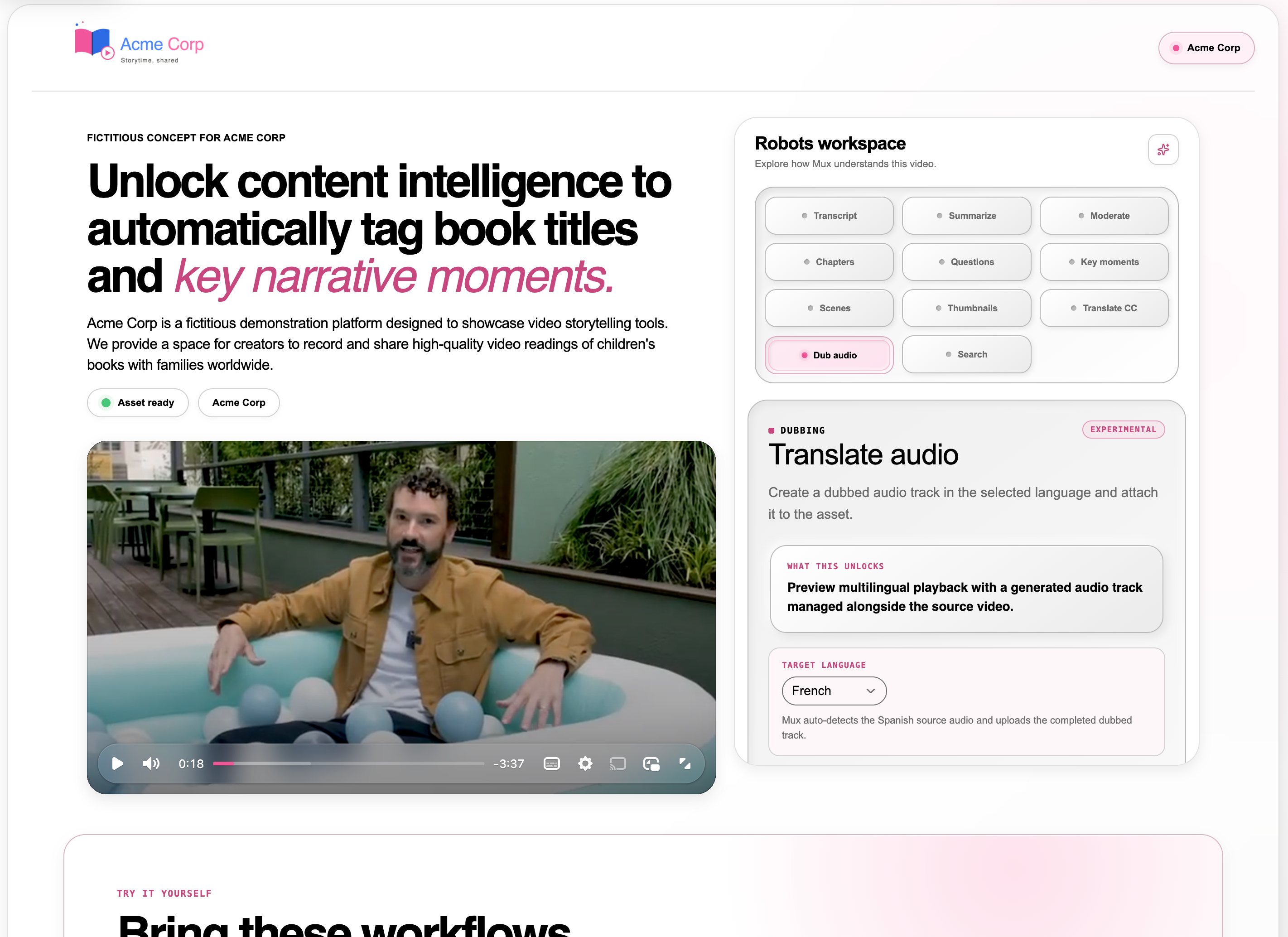
This scraped data feeds into a dynamic generation engine. The system drafts a bespoke demo landing page featuring a customized theme, headlines written in the prospect’s native brand voice, and use-case summaries pulled directly from their operational history. However, automation is intentionally tempered with human oversight. Before the page is exposed to the client, a Mux sales representative reviews the generated story, refines the strategic framing, and tailors the narrative arc to align with the specific pain points identified during initial outreach. This hybrid approach ensures that when the sales team enters a discovery call, they demonstrate an intimate understanding of the prospect’s business model.
Frictionless Ingestion of Proprietary Content
The second major pillar of Mux’s strategy addresses the challenge of content dependency. For video infrastructure and AI processing tools, demonstrations carry little weight unless performed on proprietary assets. To bridge this gap, Mux pairs its automated branding pipeline with a secure, private upload mechanism.
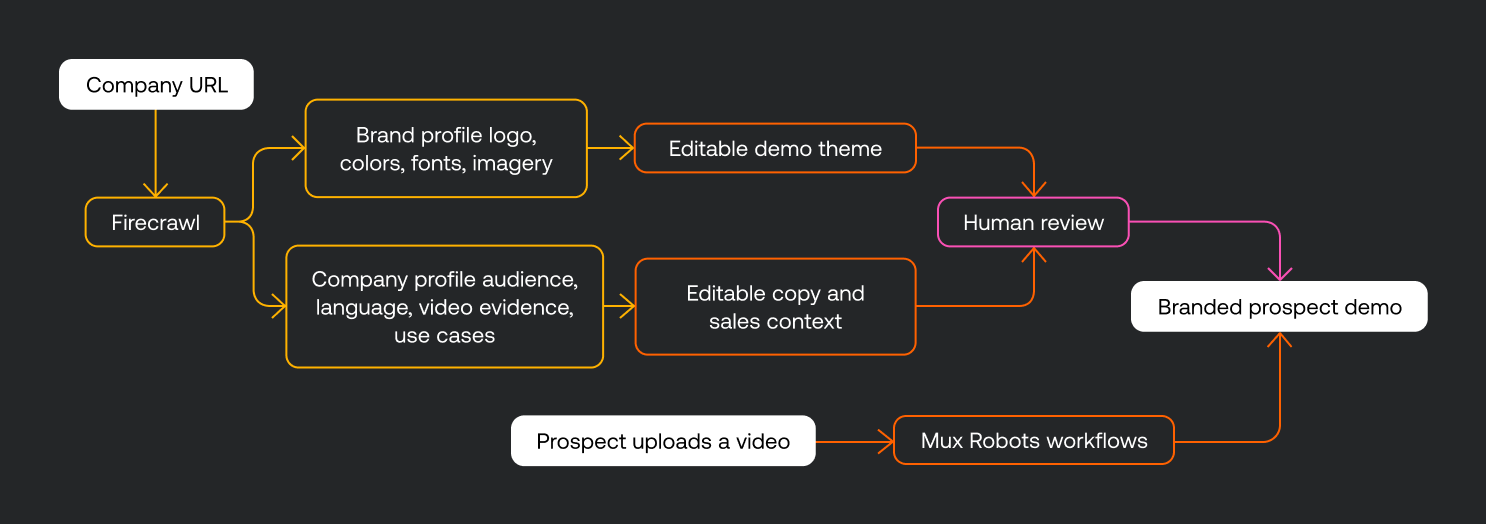
Following the initial configuration of the branded landing page, sales representatives provide the prospect with a secure file-upload link. The client drops a raw video file—ranging from customer interviews to marketing clips—into the interface. This asset instantly populates the branded video player on the custom demo page, triggering live Mux Robots workflows in real time.
By allowing prospects to witness their own content undergo automated translation, smart cropping, and instant summarization within minutes, Mux compresses the evaluation timeline. The psychological distance between the hypothetical question—"Could this work for our catalog?"—and the definitive conclusion—"This actively solves our operational bottleneck"—is drastically shortened.
Empowering Sales Teams with Dynamic Conversation Briefs
The customer-facing landing page represents only half of the newly engineered workflow. The internal counterweight is a structured "Conversation Brief" generated for the sales team alongside the prospect’s profile.
Rather than relying on rigid, AI-generated scripts that can sound robotic or misread the nuances of a high-stakes negotiation, the briefing document provides a tactical framework designed around the Find/Focus/Outcome methodology. Armed with data scraped from the prospect’s web presence, the sales representative receives specific talking points that tie Mux Robots capabilities directly to the client’s commercial objectives.
For instance, if a scraped profile indicates that a prospect struggles with search-engine discoverability for short-form video catalogs, the briefing highlights automated timestamped scene generation and thumbnail ranking optimization. Furthermore, the system integrates seamlessly with Mux’s instant clipping API. During a live sales call, if a representative identifies a compelling moment within the processed video, they can generate and share a short clip link instantly, maintaining momentum and keeping the conversation anchored in concrete utility.
Industry Implications and the Future of B2B Demos
Mux’s pivot away from static presentations toward hyper-personalized, data-driven test drives reflects a broader maturity in the B2B enterprise market. As buyers become increasingly skeptical of generalized AI capabilities, software vendors are under mounting pressure to substantiate their claims through verifiable, hands-on interaction.
The convergence of modern web-scraping infrastructure, headless content management, and robust developer APIs has made it technically feasible to build individualized software environments at scale. What once required custom engineering hours from sales development representatives can now be automated in seconds, fundamentally altering the economics of enterprise sales engineering.
Despite the sophistication of the pipeline, Mux emphasizes that the ultimate metric of success remains unchanged. Polished aesthetics and automated personalization are merely means to an end; the true test of the system is conversion velocity—whether prospects actively engage, book deeper technical discussions, and successfully integrate the infrastructure into their production stacks. By retaining end-to-end ownership of the evaluation experience, the company can accurately measure where and why deals accelerate.
As Mux continues to refine its demonstration workflows, the strategy offers a blueprint for technology companies navigating the complexities of selling advanced, API-driven solutions. By meeting prospects on their own terms—using their brand identity, their visual language, and their proprietary media assets—software vendors can replace abstract pitches with undeniable proof.